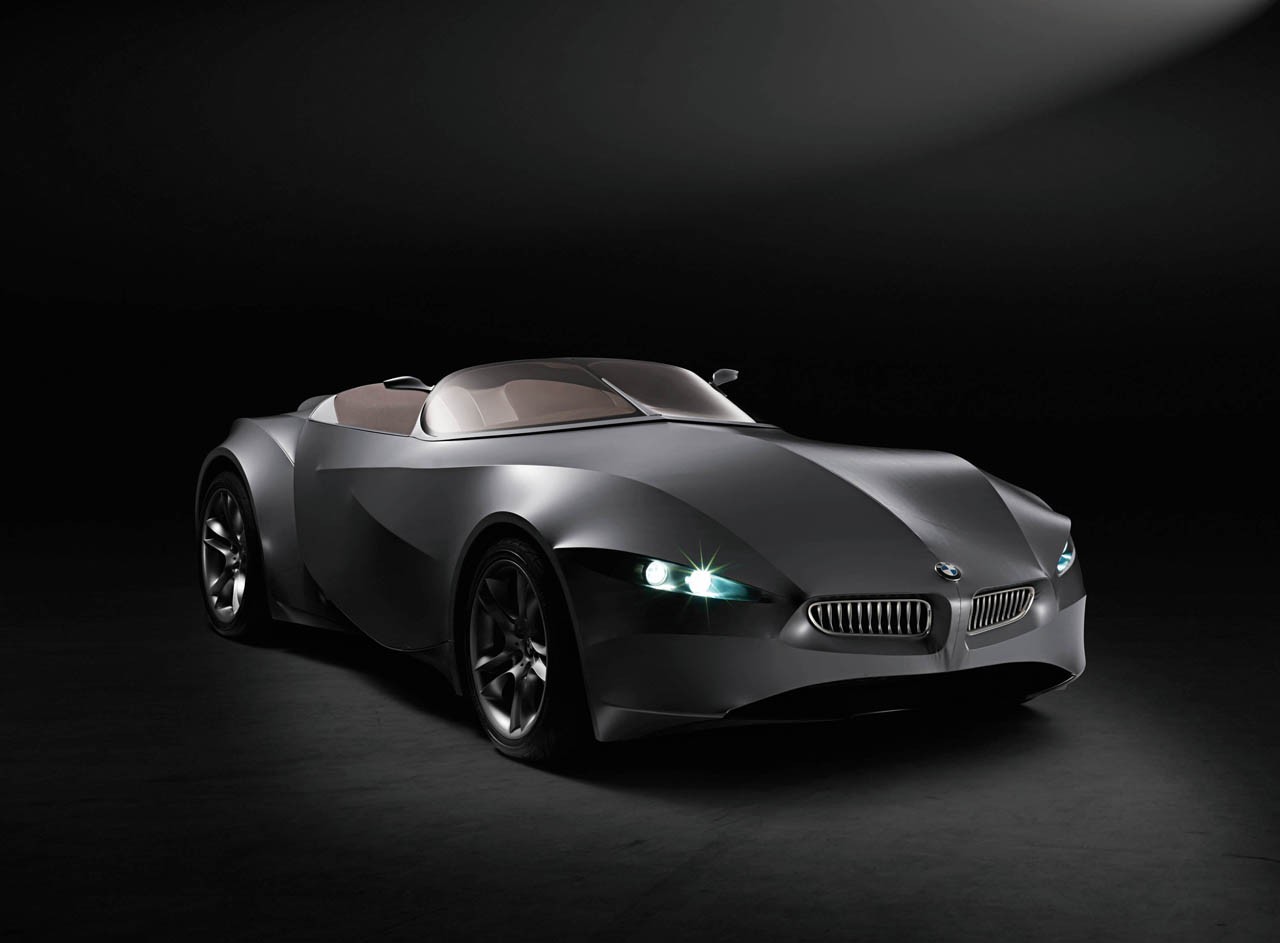
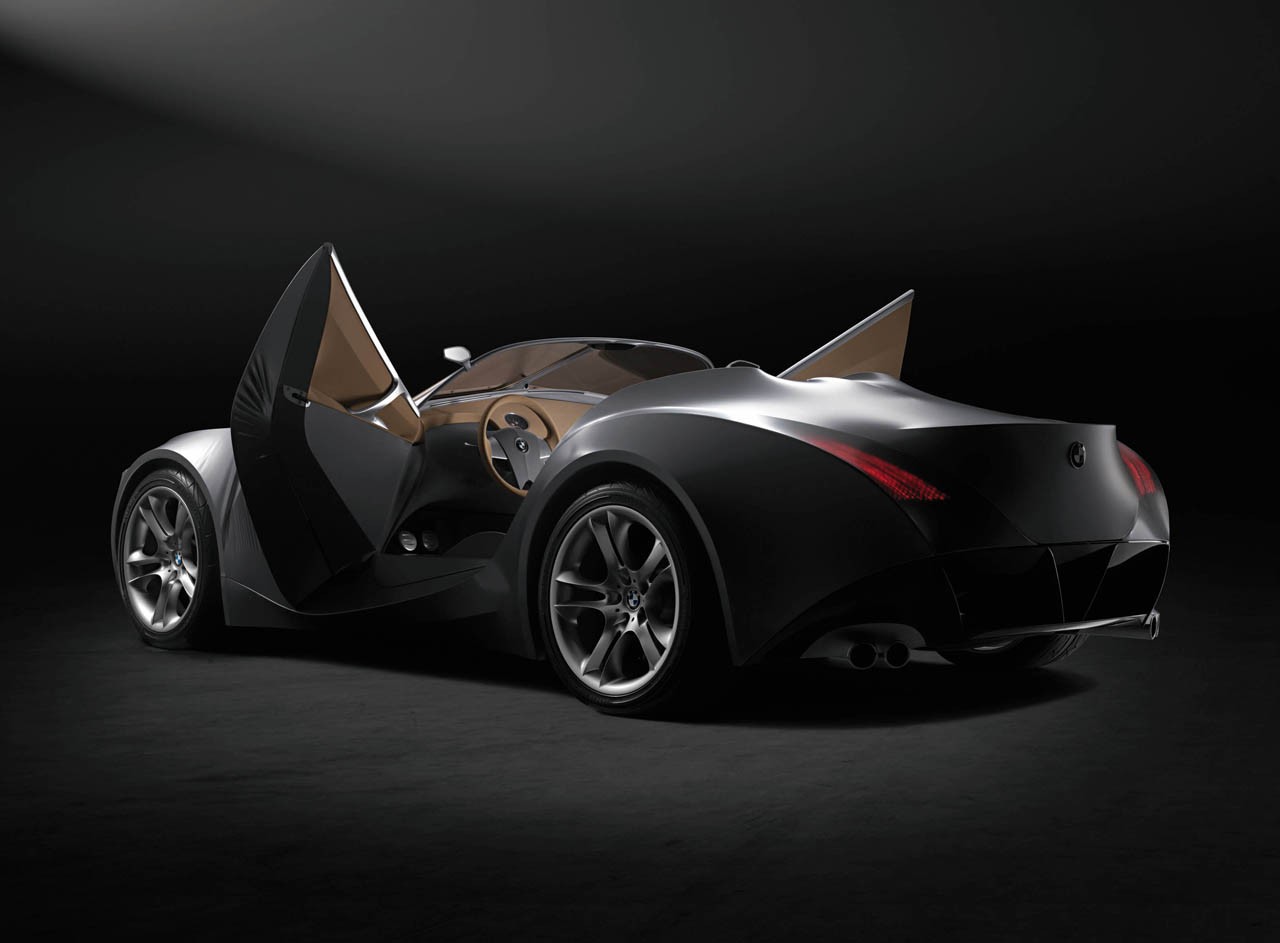
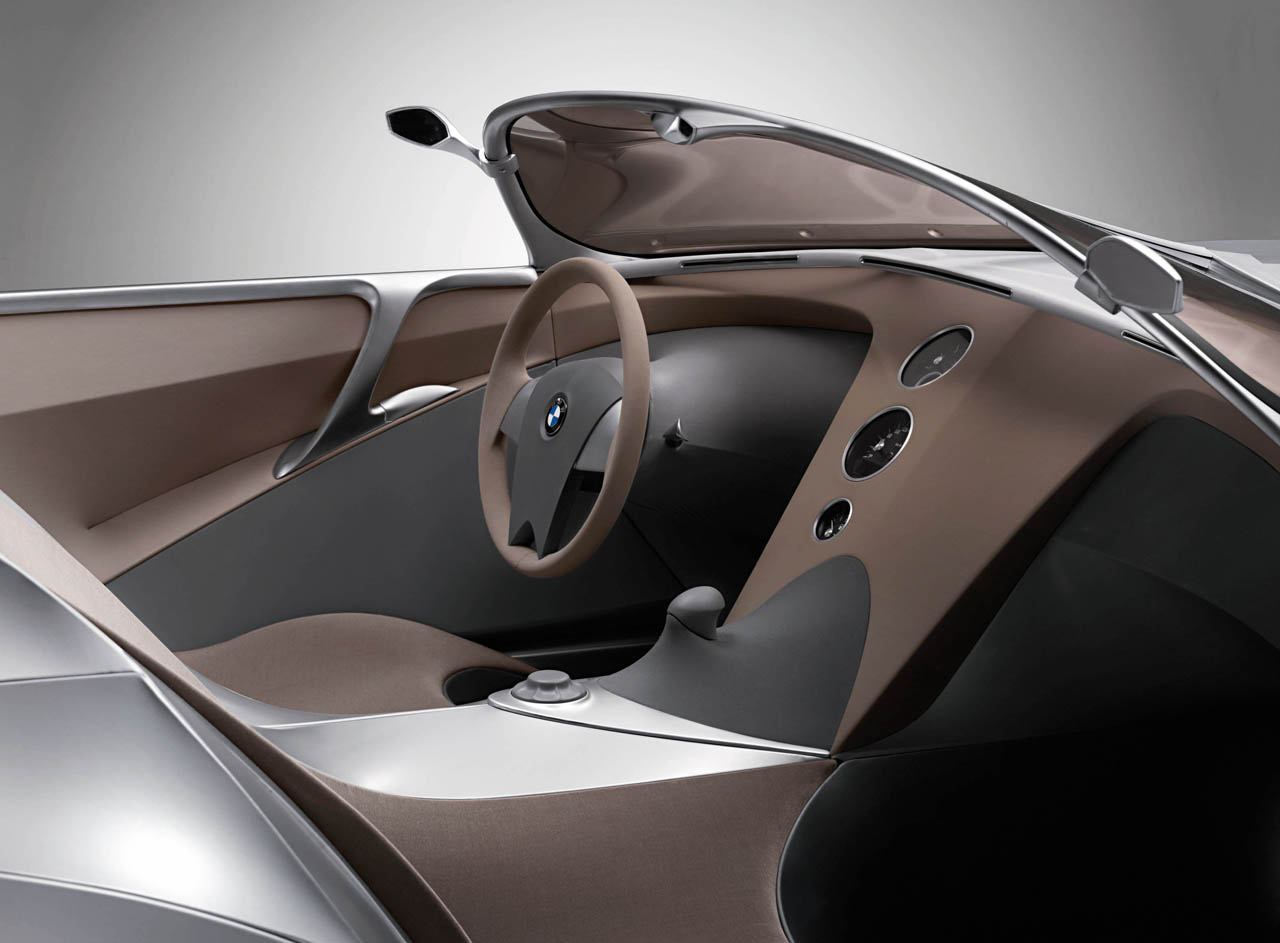
Most concept cars lets the automotive designers imagine things running around, but landing with a successful result. BMW had an idea to do something awkward, yet astonishing by molding a car into fabric. Instead of metal and steel, the GINA Light Visionary Model has a body of fabric over the metal to lets its drivers shape it to their will.
Chris Bangle, head of the design for BMW says, “challenge existing principles and conventional processes." The BMW GINA has been built on Z8 chassis and a 4.4-liter V8 and six-speed automatic transmission. BMW has stated that the fabric is resistant to water and polyurethane-coated.
Drivers can easily get in and out with ease by their interior, which actually is quite fascinating. I would encourage people to get this car because it is a different trend of designs from most other cars today in the market.

The Pontiac Grand Prix was first manufactured in 1962 General Motor's Pontiac division. Along with other full-sized car models, Pontiac also used the Grand Prix brand as a brand of cars in Pontiac's personal luxury and mid-size car market, making it next to the Bonneville in Pontiac's product lineup. The first Grand Prix became a merging of the Pontiac Catalina, with its coupe and hardtop model and the Pontiac Bonneville's trimming. As in other Pontiac vehicles, the Grand Prix received a downsizing treatment in 1978. By 2008, the Grand Prix was still being manufactured when General Motors announced a recall of all Grand Prix GTP models from 1997 to 2003 because of reported engine fires. The next year, the recall extended to Grand Prix GT models as well. As of April 2009, almost 1.5 million Grand Prix cars have been affected by this recall.
The Grand Prix's GT trim was discontinued in 2008. GXP and base trims were still available, as well as new colors were added to the available models for 2008. For the 2009 model year, the Grand Prix was discontinued altogether and was replaced by the Pontiac G8.
http://www.thesupercars.org/used-cars/used-pontiac/used-pontiac-grand-prix/
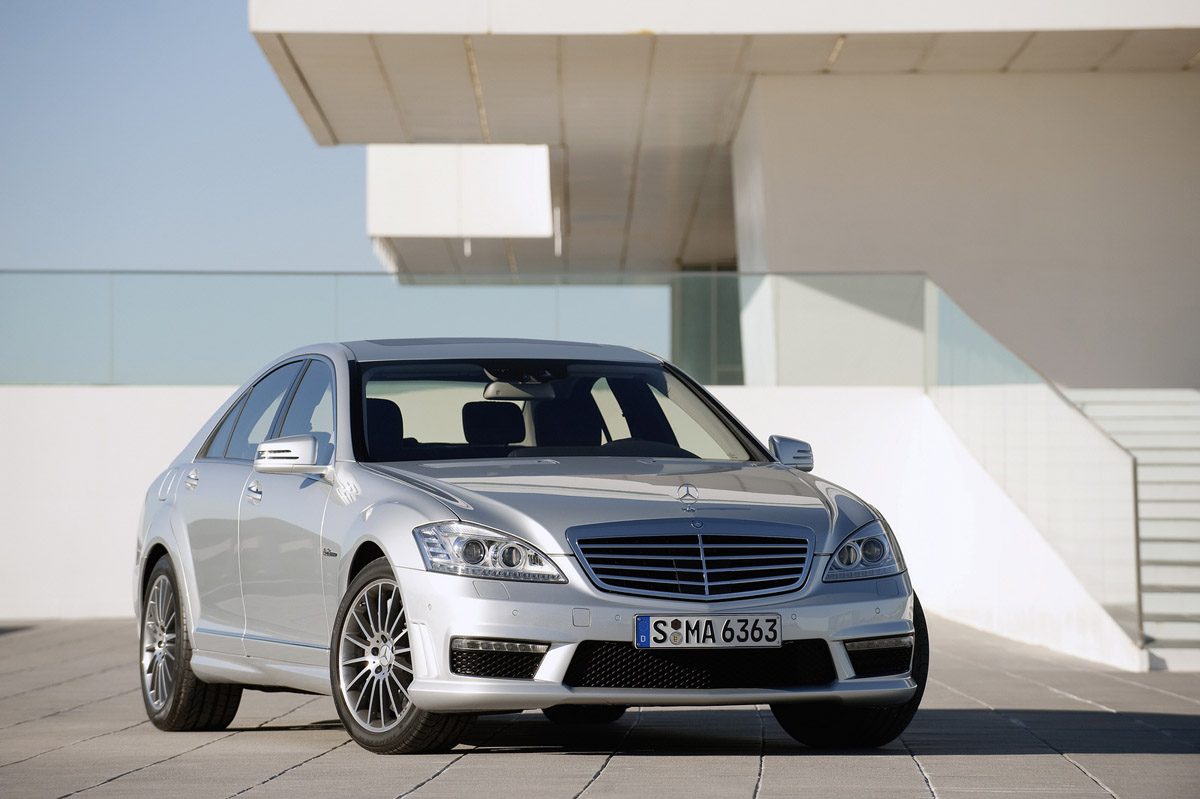
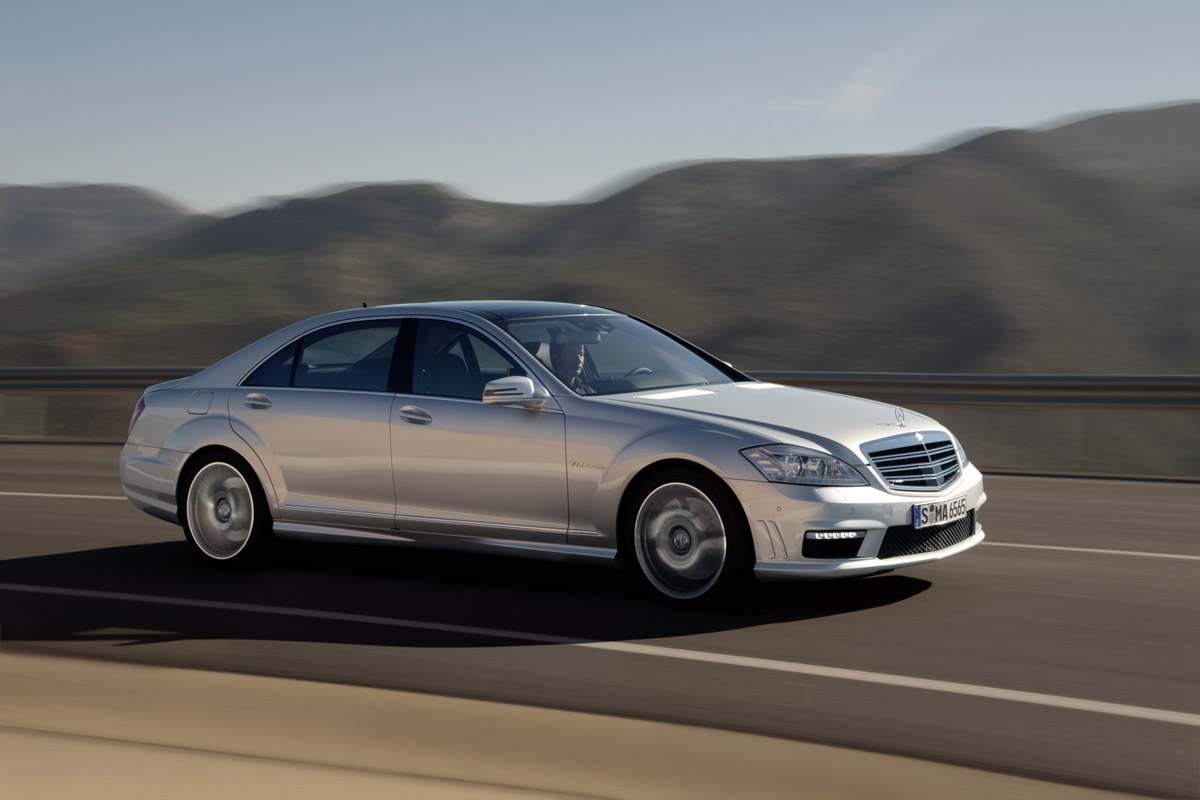
The 2010 Mercedes-Benz S63 & S65 are high performance luxury cars.
The Mercedes-Benz S63 features a 6.3 L V8 engine that delivers an output power of 525 hp, 630 Nm torque and it reaches the speed of 62 mph in 4.6 seconds. The Mercedes-Benz S65 features a 6.0 L V12 BiTurbo engine that delivers an output power of 612 hp, 1000 Nm torque and it reaches the speed of 62 mph in 4.4 seconds. Also, these cars reduce the CO2 emissions and give a better mileage and the top speed in both these cars is 155 mph.
The S63 features specially designed 7G-Tronic Speedshift transmission and the S65 features five speed Speedshift automatic transmission equipped with Direct Select which allows the gears to be shifted easily at higher speeds and stress.
Both these cars feature 20-inch wheels with double spokes. It also features AMG sports suspension that makes use of Electronic Stability Program with sensors that carefully handles the car even at critical conditions and delivers smooth and comfort driving.
The cars feature high performance Adaptive Brake System with Brake Assist Plus, Pre Safe Brakes and aluminum piston calipers on all the wheels that ensure safety braking of the car even at higher speeds.
The exteriors feature the diamond pattern design, headlights and mirrors. The interiors feature the leather seats, infra read camera, power windows, instrument panels and sporty steering wheel.
Specifications
Vehicle Type: - 4-door luxury cars
Configuration: - Front Engine
Engine: - 6.3 L V8 engine in S63 and 6.0 L V12 BiTurbo engine in S65
Horsepower: - 500 bhp and 612 bhp
Torque: - 630 Nm and 1000 Nm
Top speed: - 155 mph
Mercedes-Benz S63 & S65 AMG
http://www.thesupercars.org/mercedes/2010-mercedes-benz-s63-s65-amg/
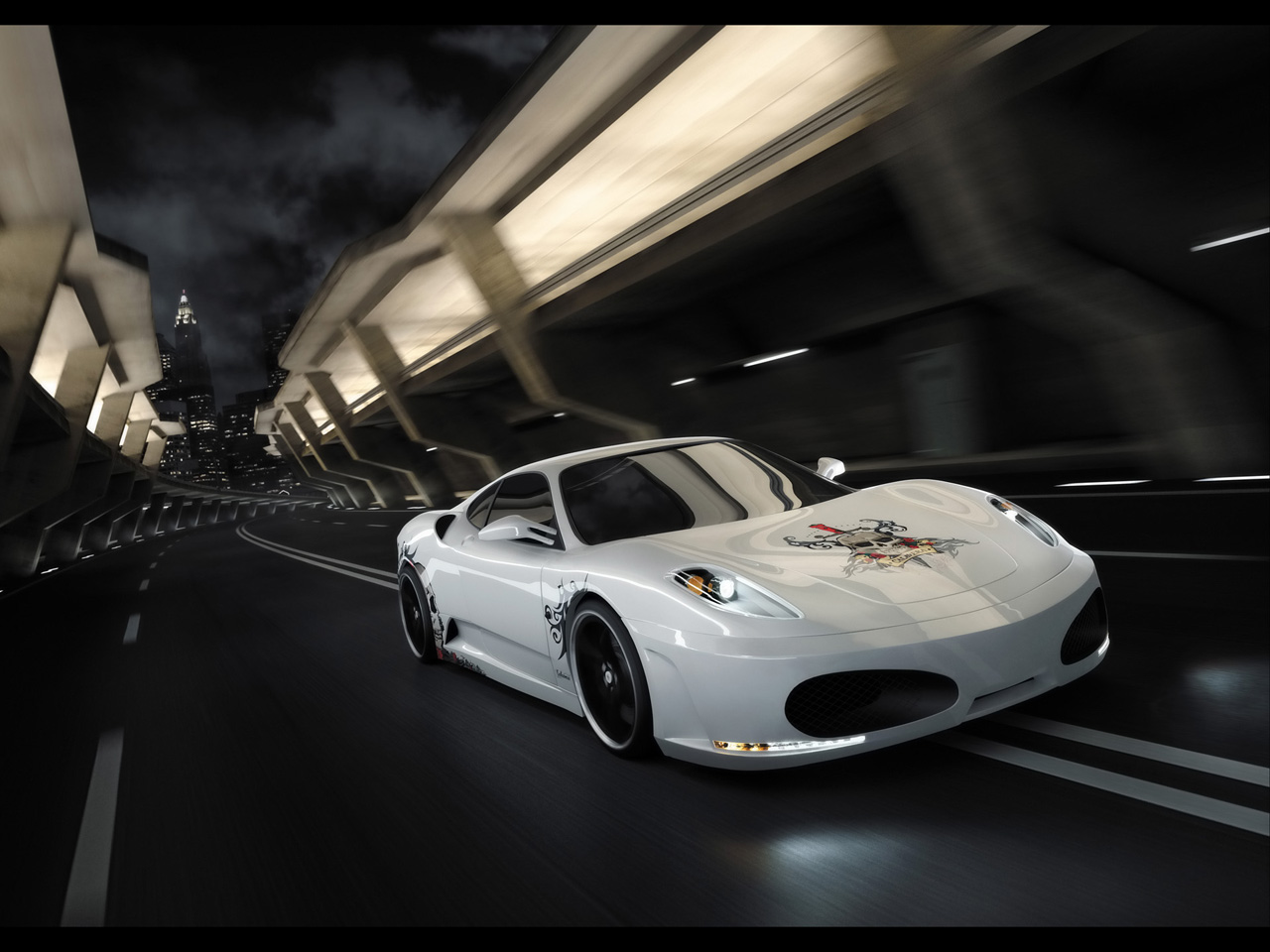
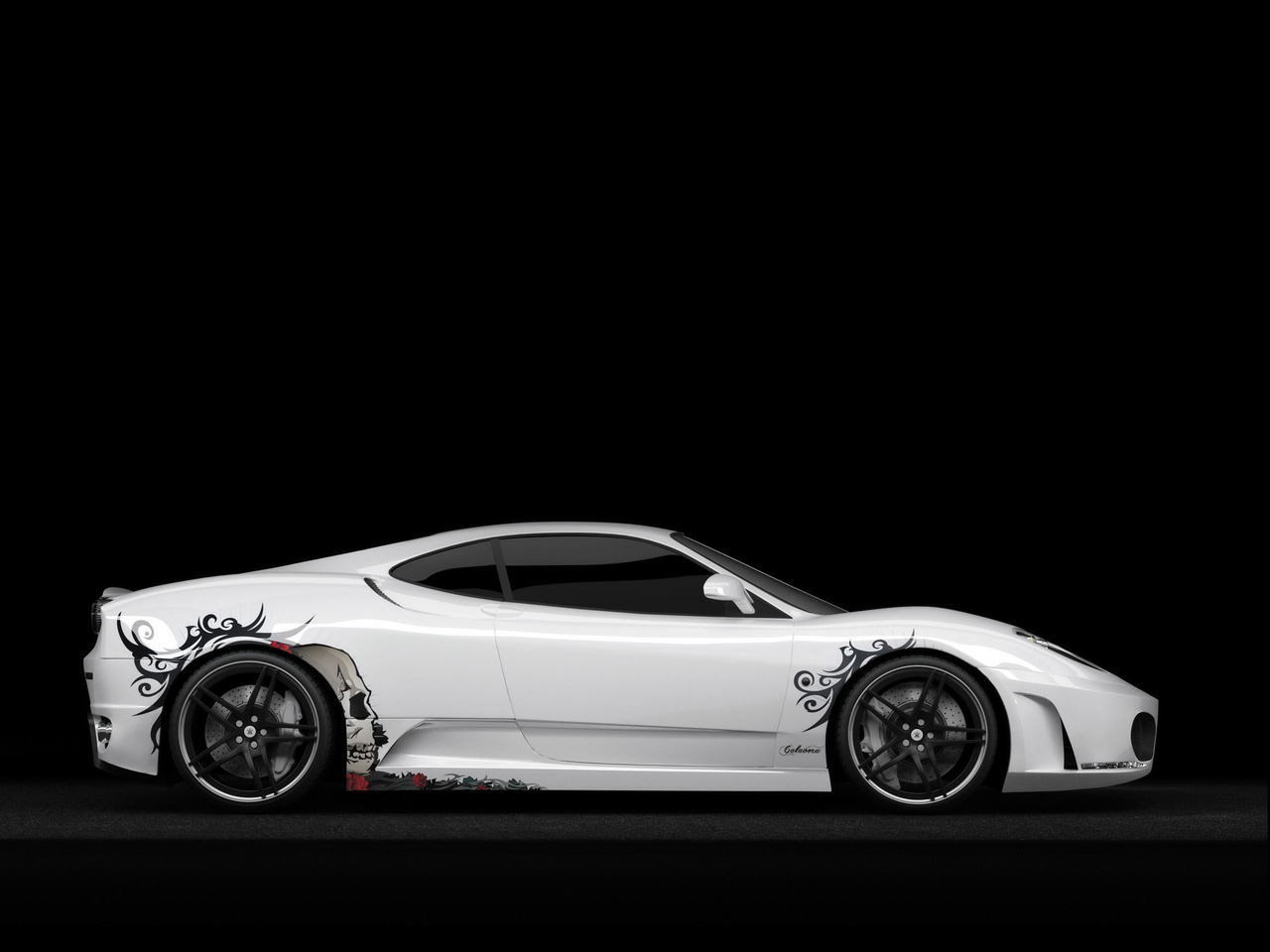
The Ferrari F430 Calavera is a two door high performance sports car.
The Ferrari F430 Calavera features a 4.3 L V8 engine with dual superchargers. The capacity of the engine is 4308 cc and it delivers an output power of 707 bhp and 712 Nm torque. The Ferrari F430 Calavera reaches the speed of 60 mph in 3.5 seconds and the top speed is about 216 mph (348 km/h).
The Ferrari F430 Calavera features 20-inch NOVITEC ROSSO NF3 wheels wrapped with specially designed high performance Pirelli tires. The wheels feature high performance braking system with piston calipers on all the wheels that ensure safety braking of the car at higher speeds.
The Ferrari F430 Calavera features sporty suspension and this suspension can be raised to an additional height of 40 millimeters and this suspension comes to the normal position when the car attains the speed of 80 km/h.
The exteriors feature the LED lights, mirrors and stylish body structure. The interiors feature the sporty steering wheel, leather seats, Apple iPod and instrument panels.
Specifications
Vehicle Type: - 2- door sports car
Configuration: - Front Engine
Engine: - 4.3 L V8
Power: - 707 bhp
Torque: - 712 Nm torque
0-60 mph: - 3.5 sec
Top speed: - 216 mph (348 km/h)
http://www.thesupercars.org/ferrari/ferrari-f430-calavera-by-unique-sportcars-novitec-rosso/

Enough of the gas-guzzling vehicles around! This time Indian roads are all set to grab the Hybrid vehicles since both Honda Siel Cars India and Mahindra and Mahindra have specified that they will make their Hybrids viable by next year. Even other automakers, for instance Toyota and Ford, have expressed their interest for the hybrid vehicles in the country.


By combining this new model with the current Insight and Civic Hybrid,
Honda also announced that another production line at its Suzuka Factory, is now producing Insight, leveraging Honda’s flexible production system. This extra capacity on line No. 3 has been opened up to cope with the high level of demand in Japan where the new Insight has exceeded all expectations.
Ito succeeds Takeo Fukui as CEO of Honda, having been President of Honda’s R&D operation previously. Like his predecessor, Ito has a background as an engineer and was instrumental in bringing the revolutionary NSX from concept to reality. Ito was in charge of one of the most challenging development areas as the Project Leader for the NSX’s ground breaking aluminium unibody construction.
To continue contributing to the global effort to reduce CO2 emissions, Honda will remain focussed on research and development of technologies that improve fuel-efficiency and will strive to deliver products with improved environmental
The CR-Z concept car made its world debut at the 40th Tokyo Motor Show in 2007. The CR-Z sporty hybrid will feature advanced technologies that deliver enjoyable driving for all, while reducing the car‘s environmental footprint.
http://www.greencarsite.co.uk/econews/Honda-CR-Z-hybrid.htm
This one has been in the rumor mill for long and has finally made its way out of the mill, with a badge saying ‘its true’. Prius is on its way to become a brand for Toyota. Toyota envisages the Prius marque to span an entire lineup of hybrid vehicles, with a distinctive styling that will yell loudly about the vehicles’ green credentials.


Jacqueline Mitchell
Gas prices are up. The economy is down. For some, neither matters--all they want is to be able to drive faster than anyone else on the road, whatever the cost.
And the cars that can deliver that promise are built solely for speed. They're not the kinds of cars that are particularly good for anything else, such as dropping off the kids at school (unless they're running exceptionally late that day) or picking up a carton of milk on the way home from work.
These cars reach obscene speeds in mere seconds, the same amount of time that normal cars need just to warm up. Just ask Tom duPont, publisher of duPont Registry, a gallery of fine automobiles.
"A Bugatti test driver took a $100 bill and plastered it on the dashboard," recalls duPont, who was invited to strap into the passenger seat for a demonstration drive. "He told me I could have it if I could grab it once we took off."
The French-made Bugatti Veyron races from 0 to 60 mph in 2.5 seconds and effortlessly cruises to a top speed of 253 mph. Most probably can't imagine what that feels like, but duPont learned firsthand.
"The car accelerates so fast that you can't touch [the $100 bill]," he said. "You can't move your hands.”
Slideshow: The World’s Fastest Cars
Pictures: Top 13 Most Fuel-Efficient Cars
In Pictures: World’s Worst Gas-Guzzling Cars
In Pictures: Cars of the Football Stars
In Pictures: World’s Cheapest Cars
Even if duPont had managed to defy the laws of physics and become $100 richer, that wouldn't have afforded him a Bugatti Veyron or any of the other nine vehicles that made our list of the fastest cars in the world. DuPont cautions that superfast cars "aren't for the faint of heart financially or physically." The Veyron is the most expensive ultra-fast car on our list, with a price tag starting at $1.5 million.
But the Veyron is not the fastest car on the road, according to the Guinness Book of World Records. In March 2007 it tested the American-made SSC (Shelby Super Cars) Ultimate Aero and crowned it the Fastest Production Car in the world.
The $654,400 twin-turbocharged car boasts a top speed of 257 mph and goes from 0 to 60 in 2.78 seconds. Snagging this title marked a first for a U.S. auto manufacturer since the Ford GT40 claimed the Guinness record in 1967 with a top speed of 167 mph.
Rounding out the top five fastest cars are the $695,000 Swedish-made Koenigsegg CCX, top speed 250 mph; $595,450 American-made Saleen S7 Twin Turbo, top speed 248 mph; and the $700,000 British-made Bristol Fighter T, top speed 225 mph.
There are only a handful of these vehicles available in the world. Bugatti has said it will build a total of only 300 Veyrons since the model was introduced in 2005; Bristol custom-builds 20 Fighters each year.
Top ten Sexiest Luxury Cars
The Most Desirable Car In The World
Lamborghini Gallardo by P-Factor
Buyers who want these cars are placing their orders two years in advance, says Bassam Al-Farraj, founder and publisher of Rich Guy magazine. People who just can't wait that long will pay a premium, he says.
He adds, "I've seen people pay a million for the Ferrari Enzo," which is no longer in production but has a base manufacturer's suggested retail price of $670,000.
All of the cars on our list are street legal. So if you really do want to use one of them to cruise around town (or test the limits of how late in the morning you can leave for work), that's up to you. When researching which cars truly go fastest--with the automakers themselves , we excluded cars that are built and equipped for the sole purpose of racing on a track. We also excluded vehicles that are no longer in production.
If the wait is a bit too much to bear for one of the aforementioned cars and you are on a slightly tighter budget, you could check the second half of our fastest-cars list--some no less expensive, or more available. But you might get lucky.
They're the $741,000 Italian-made Pagani Zonda F, top speed 215 mph; $325,560 Netherlands-made Spyker C8 Double 12 S, top speed 215 mph; the $430,000 Italian-made Lamborghini Murcielago LP640, top speed 213 mph; $497,750 U.K.-made McLaren Mercedes SLR, top speed 206 mph; and the U.S.-made Silva GT3, which clocks in at 205 mph and sells for $75,000.
Would you ever purchase one of these cars, or are they just nice to look at? Add your thoughts in the Reader Comments section below.
Despite the high prices and lack of local roads on which one can actually drive these cars at their maximum speeds, demand for these luxury treats is heating up, says DuPont. Wealthy buyers in new markets like China are searching for expensive rewards for their newfound riches.
"Only the top 2% of the economic pyramid of the world are buying these cars," says duPont. "It is a reward for achieving personal success in life. There is new wealth emerging in developing countries, and they want the same luxury rewards."
And if any of those people happen to take you for a test drive, they may, with luck, put a $100 bill on the dashboard. Good luck grabbing it, but you're probably best off just enjoying the ride.
http://arabia.msn.com/Autos/Concept/2008/may/FastestCars.aspx![Reblog this post [with Zemanta]](https://lh3.googleusercontent.com/blogger_img_proxy/AEn0k_vRqylkYEPgkZD8nsTnLhuk49mIBdYQ6xSkOiu0rFtpB_kIINZomNPM6jWAq9DkTOCR-ySa-OrD0HyALFbr8ddhfpxtojFcnLfJklIiidNgXA2UX90vE54QRhR6v8vhqw5EXtRqY8s-cDdj3z03B-cX=s0-d)

The 2009 Pontiac Solstice ranks 6 out of 8. This ranking is based on our analysis of 55 published reviews and test drives of the Pontiac Solstice, and our analysis of reliability and safety data.
The 2009 Pontiac Solstice is eye-catching and fun to drive. Altogether, it makes a solid choice for anyone shopping for a sporty roadster.
The ‘09 Pontiac Solstice is a jaw-dropping, spunky sports roadster. Though test drivers find it has its fair share of faults -- most notably in its interior cabin -- many are still attracted to its seductive design and sprightly performance. In fact, Consumer Guide says that it's a "fun-to-drive American sports car--even if they don't always impress for refinement, décor, or design detail." For 2009, the Solstice receives a removable panel roof, as well as new tail lamps and a rear spoiler.
In the market for a sports roadster? Be sure to also check out the Saturn SKY. It shares a platform with the Solstice and even receives similar reviews, but some find its styling cues slightly sportier. If, however, you value driving-thrill over sleek styling, look past both models and buy a MX-5 Miata instead. Neither the Solstice nor the SKY can match its top-notch handling dynamics. Plus it's available with a power retractable hard-top.
If you're seriously considering a Solstice, now is the time to act fast. Due to a record sales slump, General Motors has recently announced that it is shutting down Pontiac. This means that you may be able to get a great deal on a new Solstice -- with warranties being honored by other GM-brand dealerships, like Chevrolet and Cadillac. Still, keep in mind that because the company is being nixed, the value of Pontiac vehicles is likely to depreciate at a fast pace. If, however, you plan on holding onto your Solstice for a long time -- that shouldn't matter.
http://usnews.rankingsandreviews.com/cars-trucks/Pontiac_Solstice/
The 2010 Hyundai Genesis Coupe ranks 1 out of 8. This ranking is based on our analysis of 9 published reviews and test drives of the Hyundai Genesis Coupe, and our analysis of reliability and safety data.
The 2010 Hyundai Genesis Coupe is a great value, offering rear-wheel drive sports car abilities for significantly less than the competition. Still, it lags behind rivals in sports performance.
The all-new Genesis Coupe is Hyundai's sportiest vehicle yet. Sharing a platform with the award-winning Genesis sedan, the Coupe is consistently compared to the much desired Infiniti G37 -- except it costs significantly less. In fact, most auto writers agree that while the Genesis Coupe isn't without its flaws, it's definitely a great value.
Still, the Genesis Coupe can't match the performance dynamics of class rivals, like the Nissan 370Z -- which has a higher starting price, but is a sexier, much more capable street machine. Before settling on a Hyundai Genesis, be sure to test drive a Z. The Mazda RX-8 is also worth a look, as it too bests the Genesis Coupe's performance.
The Genesis Coupe 2.0T is available in base, Premium and Track trims. In addition to base and track, the 3.8 is also offered in a Grand Touring trim.

The future, a wonderful, mysterious, awe-inspiring time has promises for us. Many dream of ending cancer and other diseases. Others dream of bicycles that fly. And could we someday be able to transport ourselves from one place to another? Perhaps. But some of us have dreams that aren't that big. All we want is a car that runs on something other than fuel.
Maybe one nice sunny day, we could all drive up to the pump and put some interesting chemical in our car that would make it run forever. Maybe we could gas up on some cooking oil or even oxygen. But for now, we have hybrids. Maybe they are the answer to our dilemma. Are these cars the wave of the future?
It seems like they are for many reasons. These cars are electric. "Electric" is a word that is linked with innovation and imagination. Electric signals "power." This of course means the power to run for mile after mile. That's what a hybrid car is all about. When you get in one, you'll know you'll get to where you need to go and you won't have to stop at ten gas stations on the  way.
way.
Remember when Edison came out with the electric light bulb? Everyone thought it was a great invention, and it has changed the lives of all of us. So a hybrid car is also changing all of our lives. It's new, and very technologically advanced. Hybrid cars should get the same kind of recognition Edison did. However, hybrid cars do take some fuel to run them, but that doesn't mean we should applaud them for being able to run on both electricity and fuel.
With all of the above reasons, hybrid cars seem to be the wave of the future, bu t there are a couple of reasons why that may not be true. For instance, there must be some reason why hybrids are not selling more than conventional cars. That's because the average customer who looks at the sticker price on a hybrid car is stunned. It's just too much money for the average car buyer. And how can a car be the wave of the future if it scares people away every time they come to look at it on the dealers' lot?
Since the cost possibly overrides the benefits of the hybrid car, a hybrid car may just be a transitional car, and the actual wave of the future might be a car that is fueled by something other than "fuel." Whatever that "fuel" is, I'm sure we will all like it and then we'll be calling that fuel the wave of the future. 
Some people today are already fueling their cars with cooking oil, but that doesn't seem to have caught on world wide like hybrid cars have. Therefore, cooking oil does not seem to be the solution for us. But, maybe some day, people will start fiddling with their hybrid cars and come up with something much better than the design that is before them.
I hope you find this article interesting. Please feel free to reproduce it if you want without alteration and the usual reference to the author.

Clearing the world's most stringent emissions regulations
The Toyota Prius has been king of they hybrid hill for a while now, but with the recent introduction of the Honda Insight (check out our head-to-head comparison here), that may change. The Insight has a base level price tag of under $20,000, and it could very well lure away many hybrid buyers who can’t afford the Prius, which costs about 15% more. Not to be outdone, Toyota says they will be expanding their line of hybrid cars.
The spcific segment that they will be expanding into is the small and compact car markets. Toyota already offers an array of hybrid options for popular models like the Camry, but none of their hybrid models are priced as low as Honda’s Insight. One of the ways that Toyota will be rolling out a cheaper hybrid is to take their compact Yaris model and give it an electric motor to help the gasoline engine.
Price-wise, this makes sense for Toyota. The most expensive options with a Yaris only brings the price tag up to around $16,000, so adding a hybrid drivetrain won’t push the price over the $20k mark. While Toyota hasn’t given a definite date for the Yaris Hybrid’s introduction, inside sources hint at the 2011 model year.
http://www.greencarplanet.com/2009/04/26/toyota-to-expand-its-hybrid-offerings/Subaru will be introducing a new hybrid car in 2012 according to a statement made by Fuji Heavy Industries LTD., the company that owns the Subaru brand. However, while they announced their intention to create a hybrid, they did not say whether it would be a hybrid version of an existing vehicle in the Subaru line or a brand new model. The above pictured Subaru is the B5 TPH (which stands for Turbo Parallel Hybrid), a concept model that premiered in 2005 but hasn’t received much news coverage since. Will the B5, or a newer version of it, be Subaru’s entrant vehicle to the hybrid market?
One thing that is known about the upcoming Subaru hybrid vehicle is that it will be heaviliy influenced by Toyota’s line of hybrids. Toyota owns a 16% stake in the brand, so a lot of Toyota’s hybrid technology will likely find its way into a new Subaru model. The B5 TPH concept had a 2.0-liter fou-cylinder boxer engine mated to an electric motor and provided a sporty, fun drive with improved fuel economy. While the B5 TPH definitely fits in with the Subaru image, don’t be surprised if the first hybrid from the company is a hybrid variant of an existing popular model, such as the Legacy or Outback.
http://www.greencarplanet.com/2009/05/23/subaru-hybrid-planned-for-2012/> PERFORMANCE Nothing is lost in performance by combining an electric motor with a gas-powered engine in hybrid electric cars. Advanced technology like the Toyota hybrid synergy drive powertrain, offers improved power and performance over many non-hybrids. The additional boost in power from the electric motor in certain driving conditions also guarantees maximum performance.
| > ENVIRONMENTAL BENEFITS Air pollutants contribute to the global warming of the planet and cause a variety of serious health problems. The Environmental Protection Agency (EPA) tightly regulates the emissions coming out of a vehicle's tailpipe. Thanks to efforts from both the EPA (on the regulation side) and the automotive industry (on the compliance side), today's vehicles are significantly cleaner than in the past. Electric cars and hybrid electric cars offer the lowest emissions available, with hybrid vehicles being the most practical. If emissions performance are an important environmental consideration, reconsider one of the hybrid cars. | |

Question: Are Hybrid Vehicles Safe?
Answer:
Yes, hybrid vehicles are just as safe to drive as any gasoline-powered vehicle. Manufacturers design them to withstand the same crash specifications as normal cars and they come with the same airbag and restraint systems. Really, the only area that is of any concern is the high voltage circuits for the drive motor assembly. These components are clearly marked with the cables wrapped in bright orange casing and are not located in any areas where the vehicle occupants would ordinarily encounter them.
Sometimes it helps to get the basic questions out of the way before you dive into the technicalities. We get lots of the same questions about hybrids over and over (Don’t hybrids cost a lot to maintain? Aren’t the batteries expensive to replace? Are hybrids safe to drive?) So if you have these and other hybrid questions burning in your brain, pop on over to our hybrid FAQ corner and put your mind at ease.
Hybrids differ little from regular vehicles when it comes to routine maintenance items. Other than the systems that control the on-board storage batteries and the additional electric drive motor, routine maintenance for hybrids follows pretty much lock step with your father's Oldsmobile. Follow our routine vehicle maintenance schedule to make sure you have all of the basics covered.
If operated as designed, full hybrid vehicles have the ability to shut off their internal combustion engines and operate on the electric motor only under certain conditions. (e.g. low speed maneuvering and light cruising). Needless to say, the engine doesn’t work as hard resulting in reduced wear and tear. Hybrids also often employ regenerative braking systems that both charge the batteries and reduce wear on brake components.
Well, much of the drive train is different. Because of the way that the internal combustion engine, the electric drive motor and the transmission are mated together to work more or less as an entity, a malfunction in one component can affect the way the others function. Serious troubleshooting, diagnosis and repair of this system is best left to professionals.
Maintenance tip:You can check the transmission fluid, change out spark plugs and fuel and air filters, but delving much deeper does require specialized training.
The complex electronic modules that control the electric drive motor for both propulsion and regenerative braking can generate enormous amounts of heat, so those often have their own dedicated cooling systems.
The battery control modules regulate both charge and discharge rates as well as the state of charge of the entire bank. To operate consistently under all conditions, these systems will often employ both heating and cooling systems.
Maintenance tip:When performing the regular maintenance on the engine cooling system, remember to check the individual hoses, pipes and clamps as well as any additional filters that may be used on the motor and battery cooling/heating system.
Hybrids generally are equipped with dual voltage systems. Though most of the electrical system is safe standard 12-volt, the drive motor and related components operate well in excess of 100 volts. The safety threshold is low and narrow, an electrical shock with as little as 50 volts can prove fatal. To warn technicians and operators of these high voltage circuits, the cables are wrapped in a bright orange casing. To safely maintain and repair these components, the system must be de-powered, a task that is absolutely best left to trained technicians.
For routine maintenance on your hybrid vehicle, see our General Routine Maintenance for Alternative Fuel Vehicles.

Hybrids are vehicles that combine an internal combustion engine with an electric motor as the power source. Add a sophisticated transmission and powerful batteries and it's a recipe that makes the most of gasoline, the one fuel that's available in all fifty states--at more than 180,000 stations. Hybrids utilize the electric motor and battery storage to maximize the fuel economy from standard gasoline-burning engines. Depending upon the design and usage, hybrids can boast up to 30 percent fuel savings (sometimes more) over a comparable gasoline vehicle. And that translates into less greenhouse gases spewed into the environment also. Best of all, hybrids are designed for ease of use--just hop in and go.
Hybrids may be classified as the following:
Question: Why Should I Care About Using Alternative Fuels Anyway?
After all, it’s the big question on your mind, right: What's the big deal?
Answer:
The reality is that driving your vehicle is the one regular activity that has the single largest impact on the earth regarding climate change.
Yes, think about it: Every gallon of alternative fuel burned is a gallon of petrol not burned. That’s 20 pounds of heat-trapping carbon dioxide not released into our atmosphere, not to mention carbon monoxide, oxides of nitrogen, sulfur and more. Plus, each one of those gallons strengthens a nation’s economy and energy independence.
Did you know that cars and trucks are a significant source—27 percent—of the United States’ carbon dioxide emissions?
Many countries, including the United States, currently depend heavily upon coal, oil and natural gas for energy. The United States actually generates 70 percent of its electricity from fossil fuels such as coal, natural gas and oil, but only two percent from renewable sources such as solar and wind. What gives? It’s a complex situation, one that we address in political considerations, in walking the tightrope between industry, government and policy-making.
Yet the facts remain: Fossil fuels are non-renewable which means they utilize the sunlight captured millions of years ago—and are ultimately finite resources that will go extinct, much like the prehistoric creatures for which they’re named. It’s not a pleasant thought: Eventually (and there is great dispute as to when), these supplies will run low and the expense, labor and ability to obtain them will surpass their value.
It’s only a matter of time.So let’s take a look at renewable resources: Think solar, biomass and biofuels. They are called renewable since they are naturally replenished or re-grown, thanks to the power of the sun, in the natural course of the seasons.
And the power of the sun is a force to be reckoned with: 127 trillion kilowatts (kW) of solar energy reaches the earth each hour, and a mere 92 trillion kWh of energy are used worldwide for an entire year.
The sunshine on our faces, the wind through the trees—have the answers been closer than we thought all along?
And it’s not only how we obtain our energy, it’s how we use it. Have we had so much of a good thing we’ve become mindlessly wasteful?
Energy efficiency is all about using less energy in accomplishing the same amount of work. Economy and energy usage—they’re closely tied. For example, in 2002 the carbon dioxide from energy use rose 15 percent above 1990 levels. And during that same period, energy usage had also risen 16 percent.
Wouldn’t it be great to be able to catch all those dollars and "sense" leaking out from homes, businesses, schools, industries and government—to funnel it back into needed goods, education and services? It’s all about getting more bang for your buck.
We’re not into scare tactics—don’t get us wrong. It’s all about starting to solve the problems and not leaving them for the generations following in our footsteps.
Alternative fuels are one step in that direction. After all, if we’re all part of the problem, we can all be part of the solution.
Plug-in hybrids use an even larger battery. If they are charged up at night, they can go short distances (20 miles or more) during the day with battery power alone. On average, cars are expected to get about 100 miles to the gallon with a charging cost of $1/gallon.
There are several obstacles to plug-in hybrid cars. The car costs much more, and batteries need to be replaced and disposed of. New coal power plants will spew pollution and greenhouse gases. Batteries are polluting under the best of conditions.
There are advantages as well. Utilities would be able to use more base load power plants (running 24/7) and less of the more expensive peak load plants (not true where hydroelectric power is used for baseload). Oil use would drop dramatically if all vehicles are plug-in hybrids, bringing down both the price of oil and the amount of money going to oil powers.
From National Renewable Energy Laboratory
Standard hybrid electric vehicles contain a small- to medium-sized battery pack and electric motor. These devices help the engine operate more efficiently and enable normally wasted braking energy to be recaptured. While hybridization helps improve the fuel efficiency of hybrid vehicles, all of the energy used still comes from the fuel tank. Even the energy stored in the battery was once fuel.
In contrast, plug-in hybrid electric vehicles have the ability to recharge their batteries with electricity from the utility grid. They typically have larger battery packs and will use the stored electric energy instead of gasoline whenever possible. Under some conditions, a plug-in hybrid may even operate on electric power only. When needed, the engine and liquid fuel will be used to extend driving range and enhance performance. An onboard computer decides when to use which fuel.
Hence its name, a plug-in hybrid features a plug, which can be plugged into a standard 110-volt outlet for recharging the batteries.
It may seem excessive to spend so much time and money developing more economical cars as an alternative to gasoline automobiles, especially since the general population seems to be perfectly happy with current automotive technology, but hybrid cars offer another great advantage; far lower emissions.
When emissions or tailpipe emissions are mentioned in a discussion about cars, the terms refer to the gases released by the burning of gasoline that pollute the atmosphere. These gases are Carbon Dioxide, Carbon Monoxide, Nitrogen Oxides, and Hydrocarbons. These gases, commonly referred to as greenhouse gases, are of particular concern, because of their effect on the earth's climate by trapping heat in the atmosphere that would normally be deflected back to space. The National Research Council performed a study in May 2001 on the effects of greenhouse gas.
“Greenhouse gases are accumulating in Earth’s atmosphere as a result of human activities, causing surface air temperatures and sub-surface ocean temperatures to rise. Temperatures are, in fact, rising. The changes observed over the last several decades are likely mostly due to human activities, but we cannot rule out that some significant part of these changes is also a reflection of natural variability.”
To see how many pounds of greenhouse gases your vehicles emit every year, click here.
Hybrid cars have been accepted as an intermediary solution to the current emissions problems that we face, as they offer lower emissions than gasoline automobiles.
http://www.blogger.com/post-create.g?blogID=3835129787356416121

You might wonder why anyone would build such a complicated machine when most people are perfectly happy with their gasoline-powered cars. The reason is twofold: to reduce tailpipe emissions and to improve mileage. These goals are actually tightly interwoven.
Let's take the example of the California emissions standards, which dictate how much of each type of pollution a car is allowed to emit in California. The amount is usually specified in grams per mile (g/mi). For example, the low emissions vehicle (LEV) standard allows 3.4 g/mi of carbon monoxide. The key thing here is that the amount of pollution allowed does not depend on the mileage your car gets. But a car that burns twice as much gas to go a mile will generate approximately twice as much pollution. That pollution will have to be removed by the emissions control equipment on the car. So decreasing the fuel consumption of the car is one of the surest ways to decrease emissions.
Carbon dioxide (CO2) is another type of pollution a car produces. The U.S. government does not regulate it, but scientists suspect that it contributes to global warming. Since it is not regulated, a car has no devices for removing CO2 from the exhaust. A car that burns twice as much gas adds twice as much CO2 to the atmosphere.
Auto makers in the United States have another strong incentive to improve mileage. They are required by law to meet Corporate Average Fuel Economy (CAFE) standards. The current standards require that the average mileage of all the new cars sold by an auto maker should be 27.5 mpg (8.55 liters per 100 km). This means that if an auto maker sells one hybrid car that gets 60 mpg (3.92 liters per 100 km), it can then sell four big, expensive luxury cars that only get 20 mpg (11.76 liters per 100 km).
You can actually take steps to drive your car in ways that increase its gas mileage. In the next section, we'll look at some tips for increasing the efficiency of your hybrid (or just gas-powered) car.
Hybrid cars have become a popular alternative to traditional gasoline-only forms of transportation. These automobiles combine an internal combustion engine with a battery pack and electric motor. These additional components allow the vehicle to travel longer distances on less fuel and emit fewer emissions.
The battery pack consists of many small, low-voltage batteries called cells stacked on top of each other to create one larger high-voltage (HV) stick [source: Honda]. These sticks are then connected to form one high-voltage battery module. Most hybrids use a nickel-metal hydride (NiMH) battery pack that can both give and receive power; it gives power to the electric motor and receives power from the generator when recharging. On an eco-friendly note, these batteries can be recycled -- although car manufacturers are working on developing even greener batteries to use in their hybrids.
The amount of voltage in these cars, however small, has raised some concerns about driver and passenger safety.
While hybrids have plenty of advantages, there are a few things that some people might consider enough of a drawback to steer them away. So, it's always good to learn both sides so your decision is balanced.
The main dissent you will find in the consumer press and the blogosphere involves two basic issues: price and gas mileage. The first makes sense. Just browsing sticker prices of the hybrid sedans and SUVs will reveal that they cost more than many other vehicles. But, the gas mileage issue might throw people for a loop.
After all, hybrids are designed to reduce gasoline intake and to be exceptionally fuel efficient. They are―if compared to a mass of vehicles manufactured each year, especially the likes of the Hummer, Chevy Suburban, or Cadillac Escalade.
But up against other models, the mileage difference is not, these critics say, worth the price difference. For example, the Honda Civic is about $4,000 less the Honda Civic Hybrid. Yet, the mileage difference is separated by only one mile per every eight gallons. The critics conclude that it would take around four years for savings at the pump to make up the cost variable between these models.
Is there truth to this? Definitely. If you look at highway miles, the hybrid acts much like other vehicles. Hybrids burn gas. The electric motor is busy pumping energy back into the battery at that point. Where hybrids really save gas is in the city. That's when the electric motor really goes to work and when idling in traffic causes the engine to power down.
But there other things to look at, and ultimately the debate is a bit like the organic food debate. Is there really a difference? Yes and no. But, the consumer needs to measure whether the pluses outweigh the minuses. Much of this comes down to personal choice and lifestyle.
What we know is that hybrids do burn less gas. They cost more, but there are other financial incentives such as tax cuts offered from the IRS. Perhaps the biggest plus is the emissions factor. Hybrids release much less pollution into the air than a car that runs solely on gasoline.
But, is it better than, say, biodiesel or hydrogen? Well, probably not. However, while the former is really starting to hit the market; the latter appears years away. The best bet is simply to do plenty of research on all types of vehicles until you have a firm enough grasp of the pluses and minuses to make your own choice.
http://www.dmv.org/how-to-guides/hybrid-cars.phpSo what is the hubbub all about? What makes these cars so special that South Park will devote an entire episode to them (and the people who drive them)? There are two types of hybrid vehicle: parallel and series. Both essentially function on the same principles, with only slight variations. Both are equally complicated, but here are the basics.
This type of design involves the two means of generating power: an engine fueled from a gas tank and an electric motor supplied by batteries that generally reside under the floorboards. Both connect autonomously to the transmission, which in turn propels the vehicle. The electric motor also functions as a generator that amasses excess energy derived from the heat of braking and returns it to recharge the batteries. The power to make the vehicle function comes from two independent sources (although not necessary equally), thus you have a parallel arrangement.
In this setup, you have one system affecting the other. The engine (also attached to a fuel tank) in this case powers a separate generator. The generator then employs the electric motor, which runs the transmission that drives the vehicle. The generator, much like with the parallel hybrid, also gathers and stores energy from the brakes and dumps it into the batteries to keep them fresh.
http://www.dmv.org/how-to-guides/hybrid-cars.phpHybrid means a mix or fusion. In the case of hybrid cars, it refers to the employment of dual means to power a vehicle.
In 1997, Toyota introduced the groundbreaking Prius hybrid automobile. The futuristic-looking car was still powered by an engine. You still had to take it to the pump and fill it with gasoline. But something was profoundly different about this vehicle, which had managed to come out of production two years ahead of schedule. The buzz had to do with the electric motor that worked in unison with the engine, allowing for efficiency that until this point was associated only with mopeds and cars you plugged into the wall.
The press was curious; drivers were perplexed. Wasn't this still half an electric car? It had batteries, after all. So didn't it need to endure the same critical feature of the electric car: the recharge; the long power cord stretching from the car to a portable generator or electrical outlet?
But that was the key behind the new technology: A consumer now had many of the benefits of the electric car, without having the nuisances. The batteries in the Prius recharged internally. Thus, no need to hook the vehicle into a wall. Another drawback associated with the electric car―power―was also solved with the inclusion of a regular, albeit small, gasoline engine.
Much of the technology for the hybrid vehicle had been floating around research centers and hobbyists' garages for decades. Now a vehicle was finally available to the public (at least in Japan) that blew away the miles-per-gallon (mpg) averages of standard vehicles. Instead of 15 to 20 mpg, the Prius was getting in the neighborhood of 50 mpg. That was pretty close to the electric car. Plus, the emissions were greatly minimized.
Of course, during the booming 1990s, the bigger the vehicle the better―and the fact that gas was cheap made the mileage issue a moot point. Honda came out with the Insight a couple of years later, which topped 70 mph on the highway. Still, the big SUVs ruled the road.
In 2000, hybrids became available in the United States and were an instant hit, especially with the environmental crowd. The vehicles were so popular that dealerships couldn't keep them in stock―and still can't. There is generally a waiting list of up to six months before the car is delivered.
Today, things have changed, and bigger only means you will have a big hurt at the gas pump. Gas tops $3 in many parts of the country, and the demand for vehicles with better fuel efficiency could not be higher.
http://www.dmv.org/how-to-guides/hybrid-cars.php
 |